by Dr. Richard Vestner, Member of the Board at German Water Partnership

by Dr. Richard Vestner, Member of the Board at German Water Partnership
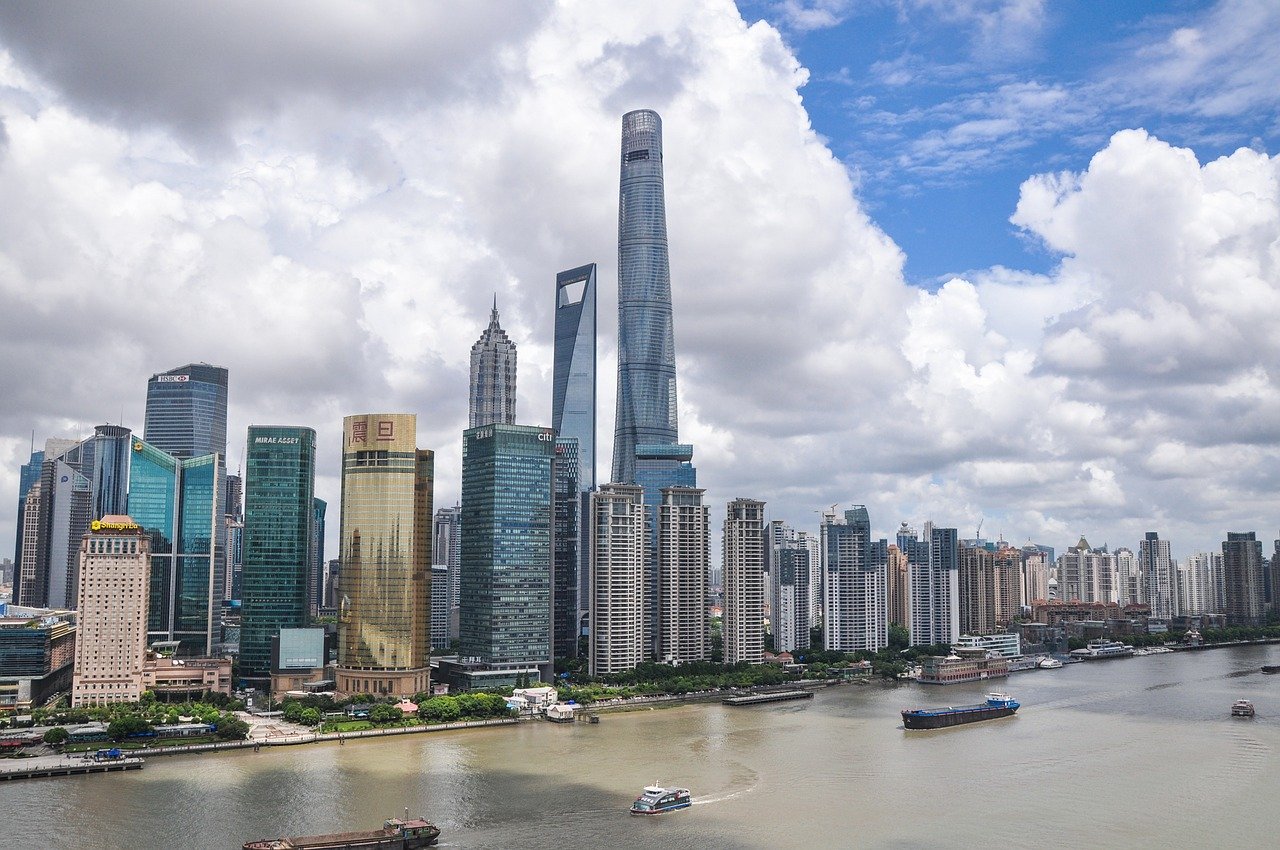
During an online meeting of the GWP Regional Forum China, participants exchanged their thoughts on the general situation in the country and the impact of the corona crisis on business.
02.04.2020 – How strongly does the corona crisis affect German companies’ business in China? “We managed to get through it relatively well”, states Franz Heindl from German mechanical and plant engineering company for wastewater treatment HUBER SE. “Right now, things are getting back to normal.” “We received a lot of orders, everything is still going on”, confirms Jörg Steinhardt from Steinhardt Wassertechnik GmbH during this extraordinary meeting of the GWP Regional Forum China, which took place online on Thursday. At the moment, there did not seem to be any real restrictions on business in China, the manager observes. “The final outcome, however, will be visible at a later stage during assembly and commissioning” he states. Despite healthy caution in light of the current circumstances, the meeting was characterized by an optimistic tone.
In China, the situation has mostly returned to normal and around 90 percent of the country’s companies have returned to production, the meeting’s participants observe. Except for the severely affected areas such as the city of Wuhan, almost all people went back to their offices and factories, reports Dr. Jiansan Zhang from the equipment manufacturer Aqseptance Group via video from Hangzhou in China. And even in Hubei – the highly affected region in which Wuhan is also located – operations are expected to be switched back to their normal mode in the next few days. In particular the water sector has remained unaffected and the chances are good that things will remain this way. According to Zhang, even after the crisis, Aqseptance’s profit expectations for 2020 are still high in China and no losses are forecasted.
Local presence remains limited
Nevertheless, it still seems to be difficult for foreigners to do business in China, as the country has imposed far-reaching entry restrictions to prevent new infections from abroad. Anyone who enters China must stay in quarantine for at least 14 days. Moreover, the same applies to Chinese. Hence it is most likely that they will try to avoid travelling in the near future. Foreigners and visa holders are currently subject to a complete ban on entry.
Furthermore, the situation in other parts of the world continues to be difficult. Thus, business trips from Germany to China will not be possible either. The Chamber of Commerce Greater China (AHK China) therefore offers German companies an accelerator program to employ local staff for a limited period of term, who will then be able to operate in China on behalf of the company. “We would like to offer companies such an opportunity in order to benefit from the current recovery in China, while it is still hard to do business and plan investments in Germany”, explains Kilian Schröder of the AHK China.
In addition, trade fairs in China such as IE expo will be further affected by the entry ban. The IFAT spin-out in Shanghai, which has been postponed to 10-12 June, will probably take place largely without foreign participation. Some companies consider sending local staff to the exhibition, since foreigners are not willing to travel to Shanghai for the trade fair at the moment.
As a result, the forum leaders, participants and the GWP office agreed to postpone the GWP session, which was originally planned for the IE-Expo in June. In general, however, the trade fair is an extremely important platform, emphasised Forum Director Prof. Martin Wagner from the TU Darmstadt. Hence, the participation of the IE expo in April 2021 will be planned in detail during the next meeting of the GWP China Forum in October.
Members of GWP can download the presentations from the meeting here.
https://germanwaterpartnership.de/eventmanager/ifat-2020/
logmein-verification-code=7a1df501-3fa5-4f1f-bc03-4b1cf27fb706

Digitalization provides new approaches, tools and means to bring about a new era of water management. Similar to other branches of industry the water industry is continuing to strengthen its competitiveness through new technologies like automation in intelligent networks.
Best practice for saving energy by energetic optimisation of aeration - reference project with GWP-members.

This broschure emphasizes that water utilities are key in ensuring sustainable development, especially in developing or emerging countries.

The specialist for ceramic flat sheet membranes focuses primarily on non-European emerging countries. COO Miriam Sartor will explain which market opportunities she sees in those countries and what the company expects from GWP.

Ms. Sartor, what does CERAFILTEC do?
Sartor: CERAFILTEC is a technology provider for water treatment plants. The focus lies on ultrafiltration with ceramic flat sheet membranes. Those can be used to separate particulate pieces with a size of up to 100 nanometers, including bacteria and germs. This means that we are working primarily in the area of drinking water treatment. However, we also see opportunities in the area of membrane biology, meaning municipal sewage, and we have already implemented projects there as well. Additionally, we are active in the industrial water sector. In this area the ceramic membrane offers different opportunities which other membranes don’t, because ceramic is better suitable for higher temperatures and under certain chemical conditions.
Since we offer a housing for the membrane you could say we are a technology platform for all producers of ceramic flat sheet membranes. Our additional services include engineering, technology consulting and trainings.
In which markets are you already active and which new markets would be of interest to you? What does international business mean to CERAFILTEC?
Sartor: We work primarily in countries outside of Europe, such as the MENA region, Southeast Asia and Africa. We have local sales partners and partners in local plant construction. We train them and bring their plants onto the local market. This increases the acceptance of the technology, value creation is happening locally and the prices stay low.
We founded CERAFILTEC in this form in 2016, based on our vision “clean water everywhere”. That is why we are interested in markets in which the infrastructure for water treatment plants is still being built and in which problems with water quality exist. We see a demand in emerging countries and that a lot is happening there. There are several infrastructure projects going on. However, we do not want to rebuild all cities and build central plants like we have here in Europe. A lot of things should happen in a decentralized manner. Our technology saves space and can be used both in large-scale plants as well as in decentralized small-scale plants.
This year we will increase our activities in China where a lot of producers of these kinds of ceramic flat sheet membranes are founded. We want to enter the Latin-American market and the Indian market as well. Those are big markets which we want to establish gradually.
The German and Middle-European market will become interesting for us in five to ten years when current drinking water facilities and sewage plants become outdated, new requirements in terms of water treatment are demanded (e.g. “4th treatment stage”, retention of microplastics) and new investments are needed.
Which topics and which working groups are interesting for you?

Sartor: My first contact with GWP working groups was with the regional section Africa. I liked that a lot and will participate in the section in the future since Africa is an extremely complex but also very relevant market. I think that the exchange in the regional section is very helpful. Besides, the regional section North Africa & Jordan is very exciting and a great group. Since we are globally active the regional sections are very interesting for us and we look into different sections to begin with.
The working group industrial water management is interesting for us as well as our technology is quite advanced in this area compared to conventional technologies.
What do you expect from GWP and the network?
Sartor: It is important for us to have an exchange with other members, to contribute our experience and to receive the notes and ideas of the others. Regardless of whether we are talking about Southeast-Asia, Africa or MENA – these markets are very different from Europe. The exchange within the GWP network is the greatest benefit for us.
Besides, sooner or later we hope to establish a contact to both plant constructors who are interested in our product and to other completion technologies. After all, we are focused on our stage, but we consequently offer advice in the target countries concerning questions what kind of pretreatment should be used or which kind of post-treatment steps are necessary. I believe that when you have a contact to a completion technology and gain good experiences you would recommend further, our customers will profit from this network as well.
Contact
 Dr. Miriam Sartor
COO
miriam@cerafiltec.com
www.cerafiltec.com

The start-up company has set itself the goal of minimizing water losses and saving energy at the same time through its measuring system. Business angel investor Thomas Clemens explains how and why he also relies on GWP.

Mr. Clemens, what does Pydro GmbH do?
Clemens: Our vision is “preserving water”, which means that we care about the protection of the resource water.
According to the UN, water scarcity will be one of the biggest problems of mankind in the next decade. We currently have 4 billion people who are threatened by water scarcity for at least one month a year and the problem will get worse. At the same time, water suppliers are losing on average 30 percent of their precious resource. This is the issue we want to address.
The utilities would like to have more data from their network. But the problem is the power supply: In the widely distributed water networks you need many sensors, the sensors need energy and the energy is often not available. That’s why we have developed a measuring system that can be used to measure data for pressure, flow and temperature. At the same time the system supplies itself with energy.
How is the environment for start-ups in the water sector? Is it difficult to gain a foothold?
Clemens: No, in principle the state or the Federal Ministry of Economics have been supporting start-ups for several years. Especially when it comes to clean technology, and that includes water, or critical infrastructures, the state provides a lot of information. The VKU also has the platform KommunalDigital, which also provides very good support. So the environment is actually quite good for start-ups in the water sector.
In which markets are you already active and which new ones would be of interest for you?
Clemens: Germany is our home market, even though Germany is the international leader in water loss with eight percent. That’s why we also look at other countries, and in Europe England and France stand out in particular. Both have a water loss of well over 20 percent, almost three times as much as in Germany. This problem is on the agenda there every day. In principle, however, the entire EU is interesting, but so is the Middle East. Water loss there may not be as high, but water as a resource is extremely expensive.
Which topics and which working groups are interesting for you?
Clemens: The trigger for us was actually IFAT. The presence of GWP is super important for us. As a small start-up, it is very difficult to have a reasonably attractive booth. Getting people to the booth is even more difficult. That’s why this was already an important reason to join GWP, but not the only one. Of the working groups, the topic “Water 4.0” of course covers exactly what we do. We want to use our data in Germany to drive digitisation forward
What do you expect from GWP?
Clemens: Contact with member companies whose solutions are complementary to our business. Cooperation partnerships are also important for us. We are already working with a GWP member that has been with us for a long time and stands for engineering in the water network. They need data for their software or for their evaluation. Therefore, they are willing to cooperate with us.
We hope that at GWP we can especially contribute to trips and projects and that we can enable many water utilities to collect data and get more information about their network.
Contact
 Thomas Clemens
Pydro GmbH
tc@pydro.com
https://www.pydro.com
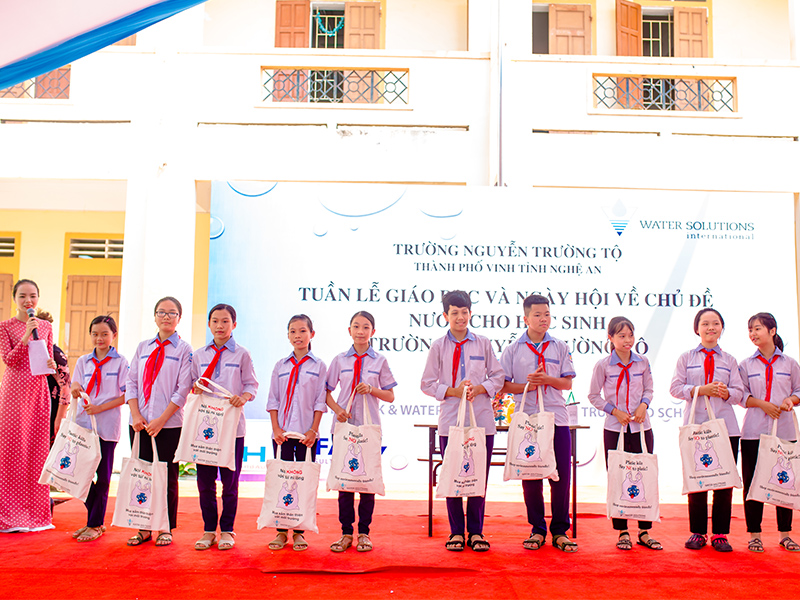

As a non-profit association, Water Solutions International makes innovative solutions and technologies in the field of water and sanitation accessible in developing and emerging countries. Frank Pogade, chairman of the association, explains the aims and areas of activity of the association.
Mr. Pogade, what does Water Solutions International e.V. do?
Pogade: We are an association that strives to transfer knowledge and technologies from Germany or Europe to developing countries. We focus not only on hardware, but especially on education, training and capacity building. We follow a holistic approach and try to work especially in developing countries where we believe we can add value.
We are a group of around 30 international and very experienced consultants. Only natural persons can become members, i.e. no companies or organisations. In doing so, we rely on the many years of experience of our members. A few years ago, we thought about how we could better network, inform and exchange information about projects and project opportunities and help each other. This networking idea has developed further, so that today we are an association instead of just a community of individual consultants.
What role do projects in foreign trade promotion and development cooperation (DC) play here?
Pogade: Many of our projects are DC-related, because we have all been working for organizatiosn like the World Bank, GIZ and KfW as individual consultants for many years. But in the meantime, we have also started working as institutions in DC projects. Besides, we work in projects that are financed through our own sources, through donations and membership fees. We also develop projects ourselves for which we are looking for investors. This concerns, for example, the area of CO2 compensation. We also have the Federal Ministry for Economic Cooperation and Development in mind.
How important are foreign markets for your organisation?

Pogade: We only work abroad, whereby our assignments and experience are naturally based on training and background knowledge from Germany. Traditionally, we are very strongly represented in Vietnam, because many of our members are also based there. We have projects and good contacts in Jordan and Africa as well and we want to expand these further.
Which GWP activities and which working groups are especially interesting for you and what do you except from GWP?
Pogade: In addition to general networking, South East Asia, especially Vietnam, is of course important to us. We are extremely well connected there. But we notice again and again that it never hurts to bring along an official representative, especially in new projects – be it a contact to a ministry, to the embassy or something similar. These are things that an association like GWP can of course provide and that is very helpful.
How do you assess the Vietnamese market for German companies?
Pogade: Vietnam has been relatively high on the list of many consulting firms for several years. The entire German consulting industry is present in Vietnam and is earning a lot of money. However, that is declining. We are noticing that the private sector is currently growing enormously in Vietnam. I am cautious with forecasts that the German water industry could supply a lot of plants here, because that is still difficult. But with expertise and especially with the participation in companies, there are a lot of opportunities here. If you are prepared to get involved in the market, for example with a subsidiary or with a small investment, then that is promising.
Contact
 Frank Pogade
Water Solutions International e.V.
f.pogade@watersolutions-int.org
Phone Vietnam: 0084 94 994 35 61
Phone Germany: 0049 157 597 21 052
www.watersolutions-int.org