
New at GWP: awama GmbH

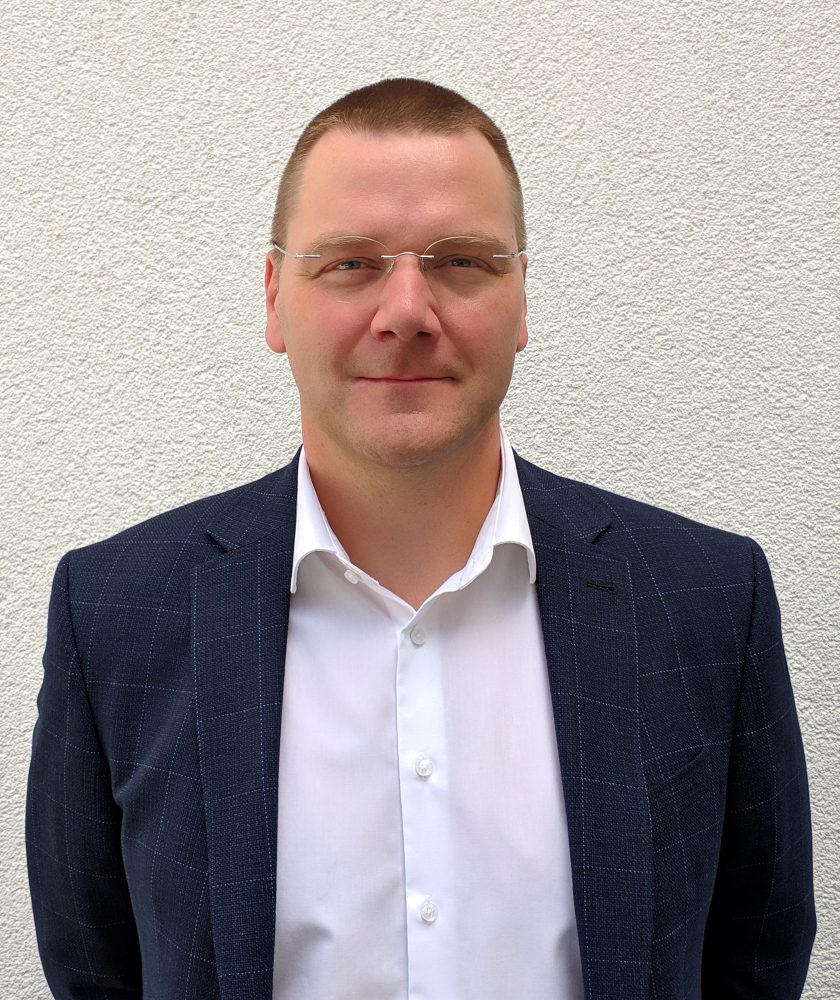
Business creation after his “Heureka” moment: Jochen Gaßmann, managing director of awama. Picture: awama GmbH

The spin-off of the Braunschweig-based machine manufacturer BMA adapts new approaches in wastewater treatment with innovative technology. Managing director Dr. Jochen Gaßmann explains its advantages and the niche his company has occupied.

Mr. Gaßmann, what exactly is awama doing?

Gaßmann: We have two divisions, which we took over from our parent company BMA Braunschweigische Maschinenbauanstalt AG. One is about so-called steam processes for wastewater treatment plants. This is a rather complex subject, in which we take a holistic view of wastewater processes from the point of view of thermal process engineering and rethink them from the viewpoints of steam utilisation, CO2 savings, phosphorus recycling and resource efficiency. We do this mainly together with our partner university TU Clausthal. This involves a lot of engineering but also mechanical and plant engineering. In some cases, we install them on our own as well. However, it is basically about interpreting, balancing, planning and drawing and then implementing together with a mechanical engineer.

In 2010, we had already considered using a steam dryer used by BMA in the sugar industry for seawater desalination. I had seen that seawater can be desalinated with the thermal discharge from the sewage sludge dryer. The temperature level fits – only the scale does not. Far too much seawater is desalinated than energy can be gained by drying sewage sludge. Professor Michael Sievers from Clausthal University of Technology then pointed out to us that with this steam dryer we can rethink the entire wastewater treatment process using thermal instead of just biological and physical/chemical processes. That was a Eureka effect. The “ Dampfprozess DryD” was born.

The second business area is a plant for automation, savings, and optimization in the use of polymeric synthetic flocculants for wastewater and sludge. These agents are used in large quantities in dewatering, flotation and sedimentation and are certainly hazardous to water. We have developed a process together with Professor Sievers from Clausthal University of Technology that enables us to save 25 to 35 percent of these polymers. This has both a financial and an operational effect for the sewage treatment plants, because the whole process is automated. And it has an impact on the dry substance which means that the wastewater treatment plant saves on disposal.

In both areas there are no direct competitors known to us. At the same time, we are working on modifications of the technology in order to promote digitization in the entire dewatering technology in the field of sewage treatment plants and in sewage treatment in general. We have reference plants that have been running for more than three years. It is a niche, but a very new niche.

In which markets are you already active and which new ones would be of interest for you? What does international business mean to you?

Awama plant technology for automation, saving and optimization of flocculant application: Automatic Multiple Flocculation (AMF) with sensor (1) and sensor (2) as well as inline centrate sensor (3). Picture: awama GmbH

Gaßmann: First of all, we take a look at the German and the European market. In Germany we already have 2,500 applications for one technology and about 500 to 600 for the other. But of course, our technologies are of interest to all sewage treatment plants and wastewater facilities worldwide. The market potential currently exceeds our possibilities, so we had to focus first, but at the same time we have a worldwide network with sales and distribution through BMA.

We have already established contacts in Tunisia, Turkey and New Zealand. If we can find multipliers and distributors who can bring our technology together with us to other markets, this will help us in the medium term.

So first of all we are expanding our network, picking the “low hanging fruits”, building up a reference list and refining the technology.

Which topics and working groups are interesting for you?

Gaßmann: We are particularly interested in the working group on industrial water management. We could adopt its topics and contents 1:1 for our advertising brochure and with our products they fit like a glove – we recycle reusable materials, we optimise the consumption of motive power, we automate, we save.

Apart from that, the working group on innovations and scientific cooperations are interesting for us because we still see opportunities in development and funding for one or the other subcomponent, and the working group on water and energy.

What do you expect from GWP and the network?

Gaßmann: We have already got in contact with other members. The international idea is very important to us, we want to be the reference in the field of flocculation and conditioning technology of wastewater. GWP is attractive for us in order to become known for building up a network, to benefit from the experiences of other members and to find synergies – and because the association with its members fits well to us.

We are particularly looking forward to participating in the GWP joint stand at IFAT.

Contact

Dr. Jochen Gaßmann
awama GmbH
jochen.gassmann@awama.net
+49 531 3939 8900
http://www.awama.net
Members’ Competences

Sustainable Use

The demand for water is growing across the world. However, our ecosystem is being put under increasing strain by the pollution and exploitation of water resources. Climate change and unfavourable conditions at a regional level exacerbate the situation even further. Efficient water management is the only way in which we can meet these challenges.

Integrated water resource management (IWRM) is a flexible, holistic approach that pursues the objective of maximizing the overall social benefits of the use of water resources while putting a special emphasis on sustainability. This approach is compulsory in the German water sector. Various science programmes are working on the development of IWRM concepts for model regions in developing and emerging countries.

Water-saving irrigation systems in agriculture (e.g. micro-irrigation systems) will reduce excessive water consumption and increase water productivity. In order to achieve sustainable development and a forward-looking supply of water, it is essential to protect groundwater in a provident, area-wide and usage-adapted way. German scientist and engineers have developed a multitude of “in-situ” technologies for the sanitation of the groundwater that also contribute to the protection of future groundwater supplies. Thanks to its numerous innovative products and important patents, Germany holds a leading position in the exploration of groundwater reservoirs.

Germany has attained great success in the area of water resources protection by means of targeted protection and sanitation measures as well as advanced legislation.

Secure Supply

Prolonged interruptions of the water supply are virtually unknown in Germany, thanks to the high technical standards of water treatment and distribution systems and the continuous maintenance of the distribution networks. As a result, German water suppliers have the lowest water losses in distribution systems worldwide. 99 percent of the population is connected to the public drinking water supply.

Roughly two thirds of Germany’s drinking water come from groundwater sources. Although in general, water availability is sufficient to meet the needs, there are areas of water shortage. Dams and reliable long-distance pipes ensure that all citizens have permanent access to excellent drinking water without chemical contamination. The legal requirements set out in the Drinking Water Act and the EC Directive are met nationwide. Scientific institutions and water supply companies have jointly developed innovative water treatment technologies (e.g. ultrafiltration).

German experts have been working on water management strategies for other climatic regions, which have already been applied successfully under a wide variety of economic, social and cultural conditions.

The German water industry guarantees the long-term stability of water supply and sanitation services, a high quality of drinking water, and high sewerage standards. All this is provided in an economically efficient and sustainable manner – thus achieving outstanding customer satisfaction.

Efficient Treatment

In Germany, everyone can obtain drinking water straight from the tap: clean, in sufficient quantities, at a reasonable price, and 24 hours a day.

In many other countries, millions of people die of diseases caused by impure drinking water.


The German water management sector would like to support these regions, offering them its experience and knowledge and using its expertise to solve their problems. Efficient drinking water and waste water treatment processes can be tailored to the requirements of other countries. The strength of German companies lies in their technically sound and innovative solutions in various areas, including the treatment of drinking water (e.g. filtration technology and desalination), sewage and sludge management, recycling management and energy recovery.

The public drinking water supply in Germany meets the strictest drinking water quality standards. All legal provisions related to this standard of quality are complied with at a national level. Used water is never wasted. Throughout the country, sewage effluents are treated according to the requirements of the relevant EU Directives and returned to the natural water cycle. In addition, new strategies have been developed to close material and nutrient cycles (particularly phosphorus recovery). The introduction of ecological, water cycle-oriented systems for sewerage management and sanitation has marked a paradigm shift in urban water management.

Capacity Development

Over the decades, German players in the field of water management − companies, politics, administrations, professional associations and science − have accumulated extensive knowledge and skills.

Together with its partner ministries German Water Partnership formulated a cross-divisional strategy for capacity development in the water sector. Its aim is to achieve coordinated action in planning and execution of measures and thus produce significant added value for all involved.

Under the headline „Qualified in Germany“ Germany strives to establish itself as a leading supplier of capacity development in the water sector, to support political reforms in the water sector and enhance export opportunities for companies.


Information trip of a Moroccan delegation to Germany

Berlin, 11.–12.12.2019

Information trip of a Moroccan delegation to Germany


Eight Moroccan buyers and multipliers in exchange with the German water sector

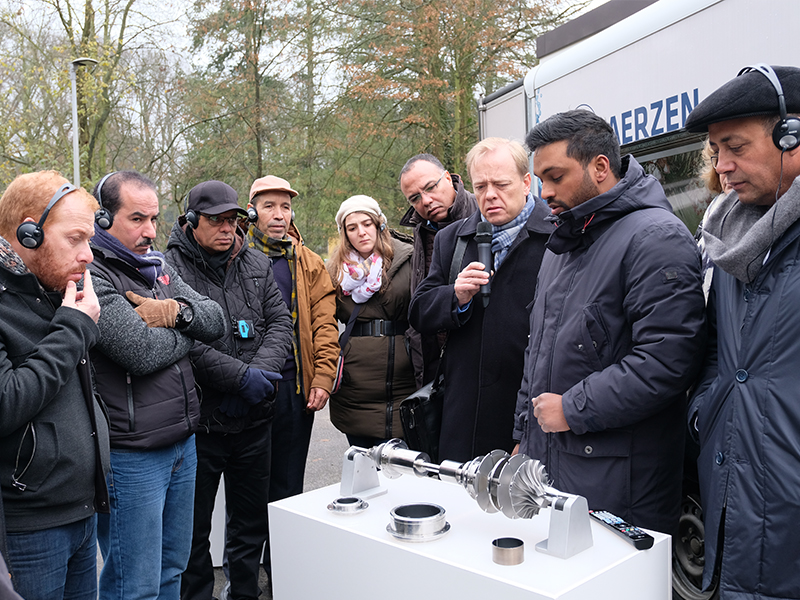
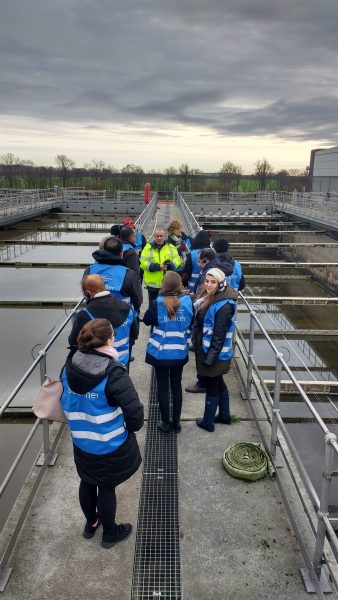
Eight representatives of various Moroccan companies and the Moroccan Ministry of Interior had the opportunity to get in touch with a range of German companies from the water and wastewater sector within the framework of different types of meetings in Berlin and Brandenburg.

Both the Moroccan and the German side have a strong interest in intensified cooperation between the two countries in the water sector. The lively exchange between members of the Moroccan delegation and the representatives of German companies during the conference as well as the numerous questions and discussions during the visits of reference objects, illustrate this considerable interest. The focus of the visits and presentations was on German technologies for coping with high water stress, from which Morocco, like other countries of the MENA region, are increasingly suffering.
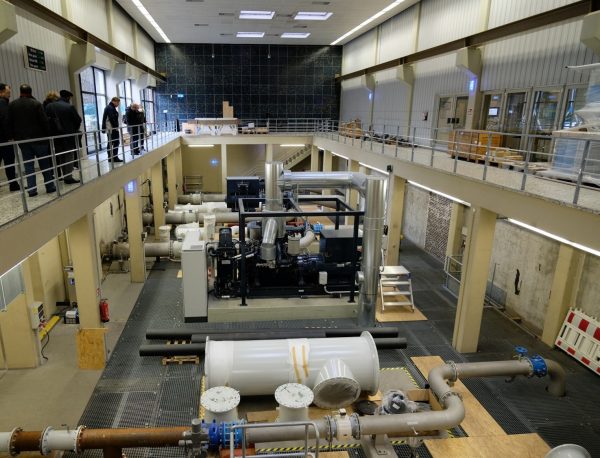
Whether in the treatment of wastewater, the treatment of drinking water or the decontamination of industrial water – the German companies involved were able to convince the Moroccan delegation of their products and the versatility of the German water sector in all areas. First concrete ideas for joint projects between German and Moroccan participants were already established during the trip.

This delegation trip was organized by German Water Partnership in cooperation with the German Chamber of Industry and Commerce in Morocco (AHK), on behalf of the German Federal Ministry of Economics and Energy (BMWi). It is a project-related support measure within the framework of the BMWi market development programme for SMEs.

Workshop on the usage of sewage sludge in Egypt

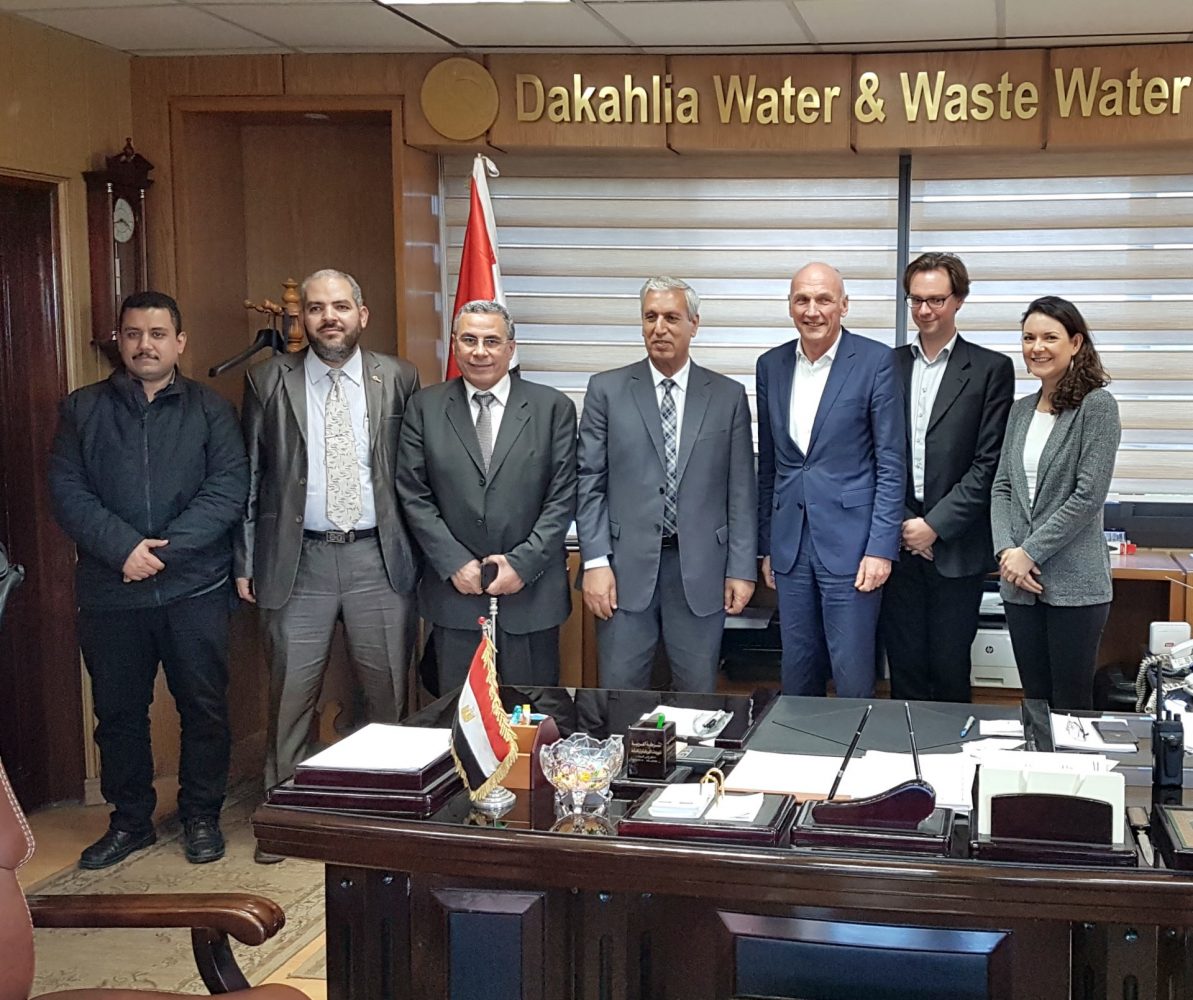
Cairo, 10-13.12.2019 – Two workshops took place in Cairo and Mansoura, bringing to a close the ENOSIS project of GWP members TU Berlin and p2m berlin GmbH in cooperation with the Egyptian Holding Company for Water and Wastewater (HCWW).

Representatives of TU Berlin, Prof. Geißen and Dr. Wellmann, Prof. Rifat of HCWW and Sarah Duschka of GWP meet the chairman of the Dakahlia Company, Eng. Khaled Nasr and his employees at the wastewater treatment plant in Mansoura.

In this context the project partners, GWP and other GWP members met representatives of Egyptian research institutes, universities and ministries. Furthermore, interested private sector and international stakeholders such as UNESCO participated and examined technical processes for the energetic use of sewage sludge. These meetings were also used to discuss the recently approved follow-up project ATLANTIS (also BMU Export Initiative) with the partners. In addition to the transfer of know-how and the exchange of ideas, a concept study on wastewater treatment plants as a resource for water, energy and nutrients in arid regions such as Egypt will be realized within the framework of the ATLANTIS project. GWP will accompany this project, which addresses four of the Sustainable Development Goals, in the next two years as project partner for coordination and public relations and will organize several workshops.

New at GWP: BEULCO GmbH & Co. KG

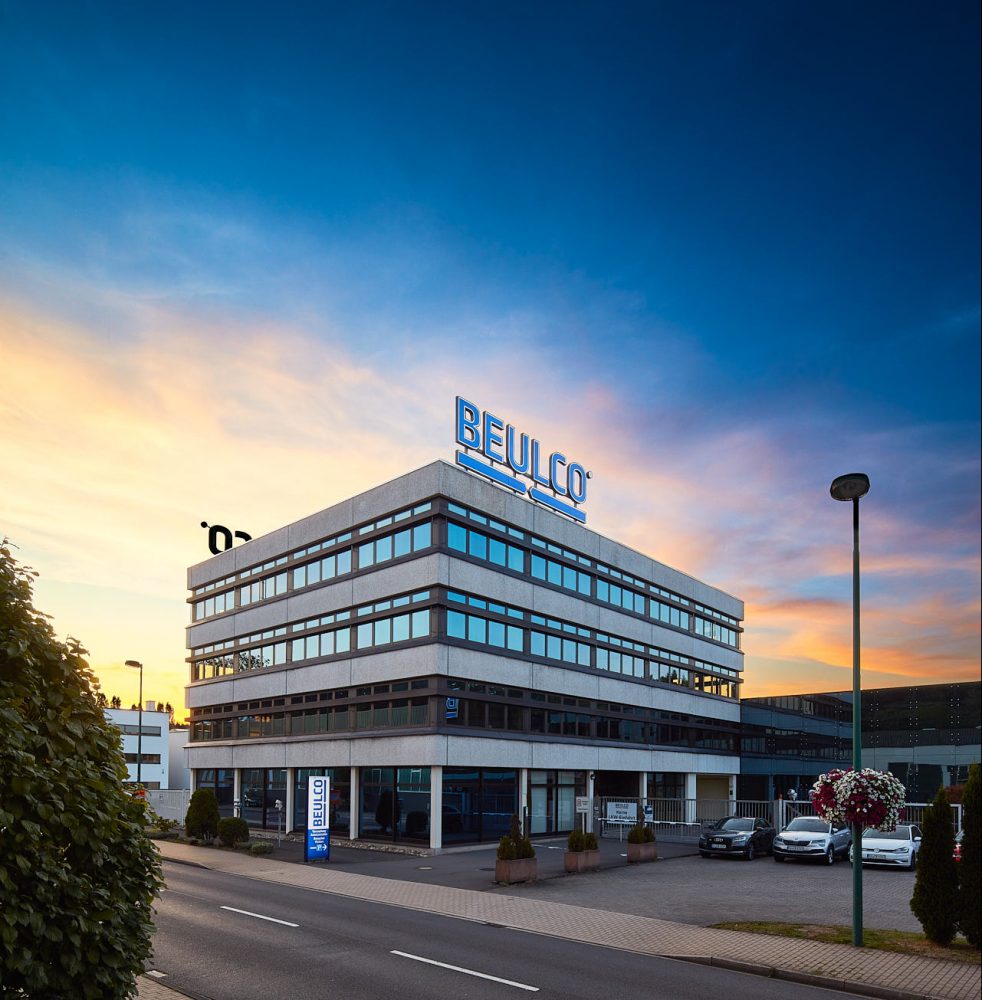
BEULCO headquarters in Attendorn. Picture: BEULCO

The medium-sized enterprise from Attendorn offers solutions in the areas of domestic connection technology and mobile water supply as well as intelligent solutions and systems for a more efficient design of the drinking water network. In the future, the company intends to generate new business opportunities, especially in Singapore, India and South Africa.

BEULCO is a member of GWP since autumn. Marketing Manager Ina Scheppe explains why.


Ms. Scheppe what exactly is BEULCO doing?

Scheppe: BEULCO is a family business from South Westphalia. Our core competence is metal treatment. We have been manufacturing products and systems for water supply since the company was founded in 1950. We have our own range of products for domestic water connection technology in the drinking water sector and mobile drinking water distribution. The aim is to safeguard drinking water and maintain drinking water hygiene. Drinking water supply is and will remain our core market. Additionally, we have complemented the area of disinfection and launched BEULCO Clean, our own disinfectant for drinking water and drinking water systems.

Since the beginning of this year, we are part of the DigitalHub at the Fraunhofer Institute in Dortmund, where we work on intelligent solutions and systems for drinking water supply and promote the digitalization of water infrastructures. Our goal is to make drinking water supply even safer and more efficient in the future.

In addition to the production of our own program, we also manufacture components from non-ferrous metals for other suppliers, especially in the field of building services engineering in the drinking water sector.

What does international business mean to your company?

“Above all, we expect to be able to accelerate our time-to-market processes,” Marketing Manager Ina Scheppe. Picture: BEULCO

Scheppe: Our core markets, in which we have been active for decades, are the DACH region, the Benelux countries and Scandinavia. We have identified Singapore, India and South Africa as new target markets – especially for digital products and smart solutions for water supply.

Singapore, because there is an openness and understanding for future-oriented innovations and technologies – Singapore is very far ahead in the development and the implementation. Singapore has recognized how important it is to work on a functioning water supply. It is interesting for us to closely observe trends in Singapore and to introduce our solutions. This is exactly what we are looking for. In Germany, digitisation is a major component for the majority of German companies in the water sector. But when it comes to implementation, a lot of companies are still in the beginning. Although the opportunities have been recognized, utilities and waste management companies are still reluctant. Furthermore, India and Africa, because in many places the entire infrastructure is currently being set up.

In 2019, we attended a relatively large number of trade fairs in Singapore, India and South Africa and in addition established new contacts through several business trips. We are currently expanding these contacts and trying to find the right people to build long-term relationships.

Which GWP activities and working groups are you particularly interested in?

Scheppe: Definitely the relevant regional sections and the working group Water 4.0. In addtion the working group Industrial Water Management, since our disinfection solutions might be also interesting for the industrial sector. Hence, we may be able to find out which of our solution can be used for this matter.

What do you expect from GWP?

Scheppe: To establish good contacts to other market competitors in our target markets and to support the development of new regional markets. In addition, we hope to benefit from the specialist expertise in other countries and, for example, accelerate extensive market research through the network and make our time-to-market processes more efficient.

Drinking water is a global issue and demographic change and climate change will present immense challenges for us in the future. That’s why we would like to draw attention together with GWP to find ways for new and innovative solutions and thus, ensure an efficient supply of clean drinking water in the long term – also in Germany.

Contact

Ina Scheppe
Marketing Manager
BEULCO GmbH & Co. KG
Phone: +49 2722 695-219
Mail: scheppein@beulco.de
www.beulco.de


Special Presentation on Vietwater 06.11.2019

Successfully establishing vocational training and skilled engineering technicians based on German standards in Vietnam

Plus a visit by the German Consul General Dr. Josefine Wallat


Vietnam is working hard to improve its wastewater sector. By 2020 it aims to raise the share of treated wastewater from 10% as of today up to 60%. To reach this goal, more than 8.000 additional skilled workers are needed. This means, every year 800 technical workers need to be trained and qualified for the next 10 years.

In order to tackle this challenge, the new occupation “Sewage Engineering Technician” has been established. The respective vocational training program ensures high-quality training based on German standards.

This has been made possible by the program “Reform of TVET in Viet Nam”, implemented by Deutsche Gesellschaft für Internationale Zusammenarbeit (GIZ) GmbH on behalf of the Federal Ministry for Economic Cooperation and Development (BMZ), the consortium of the consulting companies GOPA/ PLANCO in cooperation with Dresden Sewage Company under the guidance of GIZ.

The cooperative model, which is based on the close cooperation between TVET institutes and the business sector, is pursued to ensure that the training is demand-oriented and practice-based, thereby enhancing the employability of the trainees. From November 2015 to October 2018, the first cooperative training course with 22 trainees has been piloted at the College of Technology II and five partner wastewater companies in Ho Chi Minh City, Binh Duong, Khanh Hoa, Can Tho and Ba Ria – Vung Tau.

Learn more about this unique and successful vocational training program at the German Water Partnership booth at VIETWATER 2019!


6. November 2019, 10:30-11:30 at GWP booth, C35


Download Factsheet (EN)

Download Factsheet (VN)


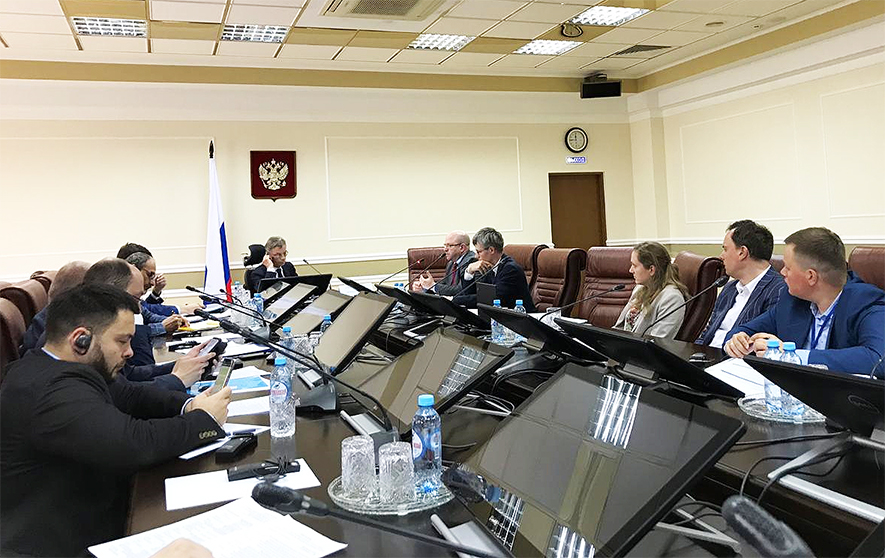
Showcase in Russia for water management technology

Successful start of the exhibition in Russia for water management technology providers! The prospects for German-Russian economic relations are promising. German Water Partnership is part of a delegation with seven member companies starting in Moscow and moving on to Saratov and Volgograd.

Foto by GWP