
Whether pharmaceutical residues, plant protection products or PFAS – many of these so-called anthropogenic pollutants pose major challenges for conventional treatment technologies. The Leibniz Institute for Plasma Science and Technology (INP), a long-standing member of the GWP, is focusing on innovative plasma processes that not only retain pollutants but also break them down directly. In this interview, Prof. Dr Jürgen Kolb explains how the process works, where it is already being used today – and what role it could play in sustainable water management in the future.
Professor Kolb, the INP emphasises the importance of plasma processes in water treatment and the degradation of pollutants. How do you assess the potential of plasma in the treatment of substances that are difficult to degrade, and how does it compare with conventional systems?
Not only from our perspective, but also as a result of the work of colleagues worldwide, plasma processes have long been an alternative for breaking down substances that respond poorly to other, established methods. This applies to exhaust air purification and to water treatment as a method for breaking down germs and viruses, but above all also anthropogenic contaminants, such as pharmaceutical residues, plant protection products and, increasingly, perfluorinated hydrocarbons – the so-called ‘forever chemicals’.
The advantage of plasma processes is that pollutants are actually broken down and degraded, rather than merely being trapped in filters. This is something they have in common with ozonation and other advanced oxidation processes (AOPs). However, ozone is ineffective against highly persistent compounds, such as X-ray contrast agents, whilst AOPs utilise the significantly higher oxidation potential of hydroxyl radicals.
In a plasma, these radicals are formed directly through an electrical discharge as a result of their interaction with water. Apart from electricity, no other operating resources are required. This means there is no need for additives such as hydrogen peroxide, catalysts such as titanium dioxide, UV irradiation or complex electrode coatings. This is one of the key advantages of the technology, which is therefore well-suited to on-demand use and control.
How do your plasma processes contribute to reducing water pollution and to the recycling of process water? What measures do you take to promote the sustainable use of water resources?
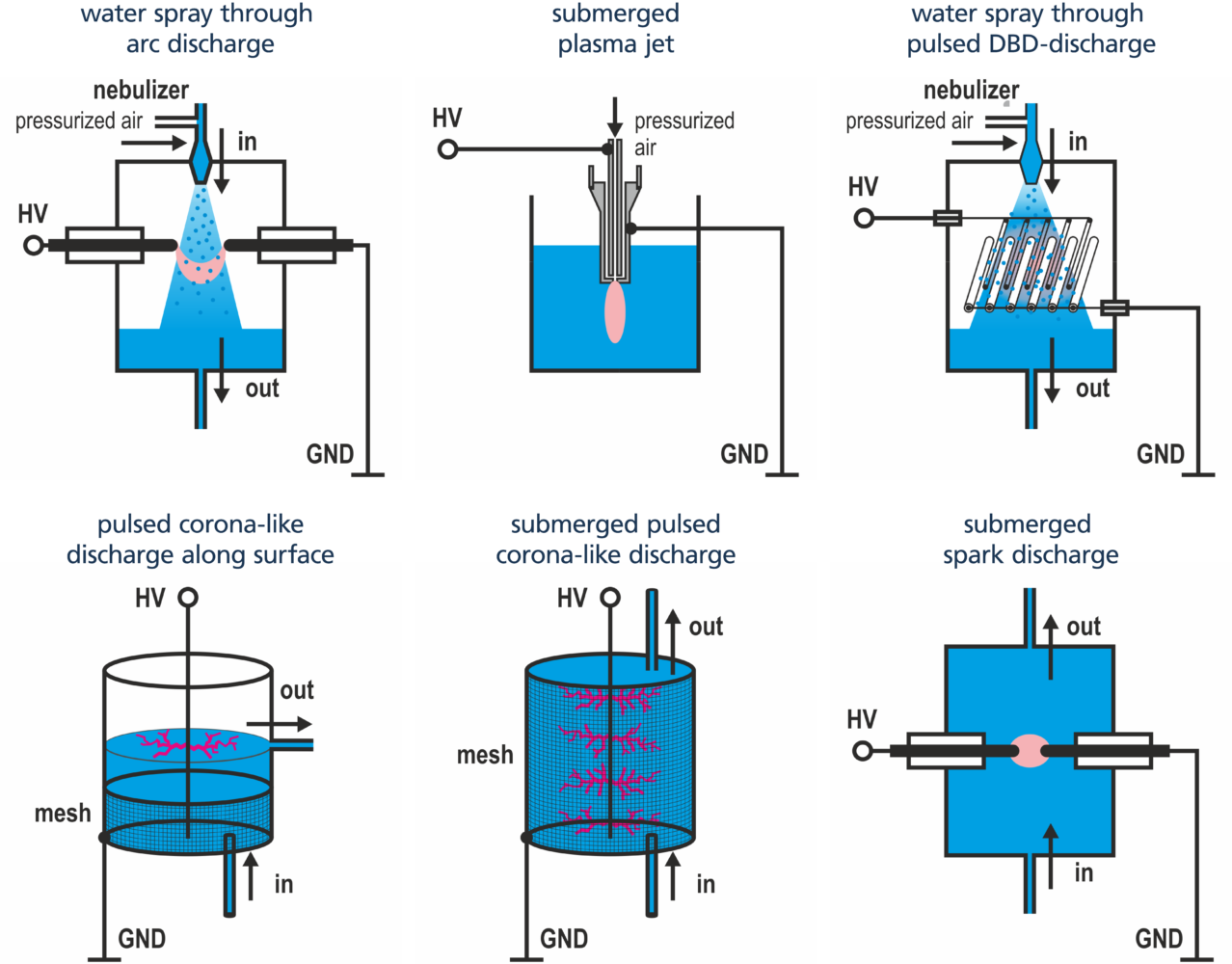
Various methods for using plasmas in the treatment and purification of water. In particular, plasmas can also be used directly in water or in a water spray mist by employing suitable electrode configurations and operating parameters.
In addition to the aim of reducing the discharge of pollutants into the environment, the successful recycling of water back into production processes is important. Our current focus is on food processing and agricultural production. Large quantities of fresh water are often required for this purpose to guarantee hygienically sound products. The volumes of water required for this are increasingly being scrutinised, not only for environmental reasons but also for economic ones. The companies concerned, which are often smaller enterprises, generally lack the experience to operate water treatment systems and thus to recover water.
Many existing solutions are off-putting because of the specialist knowledge required to operate them, or are unsuitable for process effluent, which is often contaminated with microorganisms and prone to biofilm formation. Plasma systems, in combination with simple mechanical filters, can offer a solution here. Furthermore, they are effective against both pollutants and germs. However, the processes must be adapted to the specific conditions and requirements. Good examples for which we have developed solutions include washing processes, such as those for pre-packaged salad. Here, the use of plasma-treated water results in a safer and longer-lasting product. Other applications we are exploring include water recirculation in hydroponic cultivation systems (vertical farming) and in aquaculture facilities, which currently have a high daily demand for fresh water. Reducing this demand would directly lead to more sustainable operations.
However, the possibilities are not limited to food production and processing. Its use in laundries, for example, also shows great promise.

Can you give us an example where INP plasma technologies have led to successful wastewater treatment? How do your technologies help to optimise processes whilst reducing environmental impact?
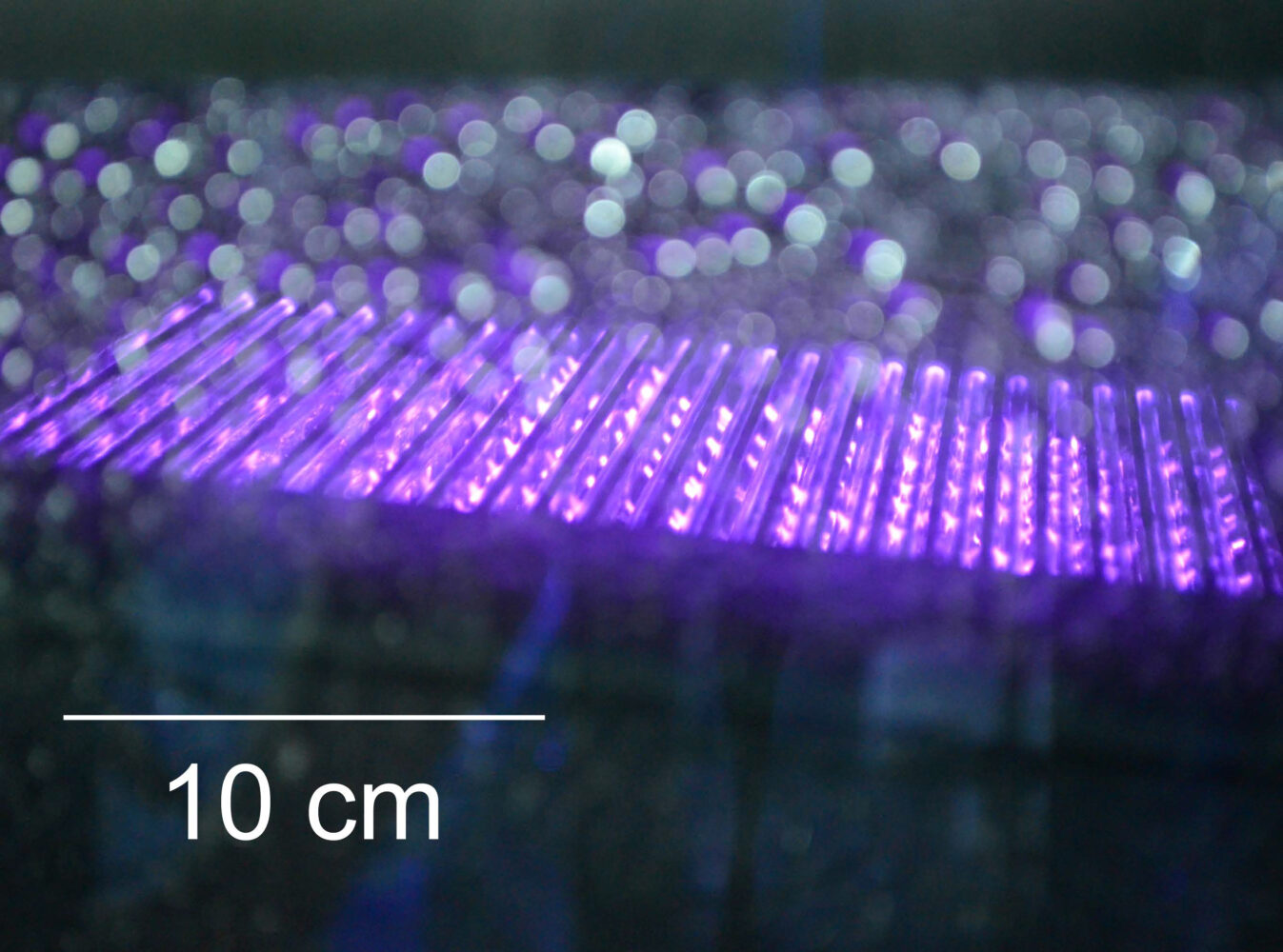
Water is sprayed through the electrode configuration to generate the plasma for treatment.
The examples demonstrate the best use of plasma technology at the very points where wastewater contamination arises – that is, locally at the ‘hot spots’. A successful example of plasma treatment is the treatment of hospital wastewater to prevent the spread of antibiotic-resistant microorganisms. In this process, plasma is used to combat germs and break down the antibiotic residues themselves. For the wastewater from a comprehensive utility provider, the treatment led to the complete inactivation of the native E. coli load under investigation; in this case, no bacteria could be detected on the agar plates. Antibiotic levels were reduced by up to 80 per cent without, as yet, optimising effectiveness or energy efficiency – something we aim to improve in future studies. The aim is for hospitals to be able to discharge pre-treated, low-contaminant wastewater to municipal sewage treatment works. In addition to antibiotics, X-ray contrast agents and AOX levels also pose problems for sewage treatment works.
We have also achieved good results in the degradation of agricultural chemicals. For example, glyphosate, like other herbicides and fungicides studied, can be degraded very effectively using plasma. The use of plasma is also an economically attractive alternative, particularly for substances that respond poorly to ozonation due to the selectivity of ozone. However, identifying the best location for the plants is challenging. We are therefore working with GWP member companies to focus on the recycling of process water by combining existing technologies with plasma treatments. In general, we are seeking to reduce the load on municipal sewage treatment works through the plasma process. The process could ultimately become part of a fourth treatment stage, although the larger volume of water and the high degree of dilution pose a challenge for the scalability and performance of the systems.
In which international markets do you see the greatest potential for the application of your technologies?
We see the greatest benefit for plasma technology in regions where water is a highly valued resource – that is, where it is scarce and expensive – making treatment and recycling extremely attractive. These are often also regions where electricity is cheaper than in Germany or can be readily supplied from renewable sources. This plays into the hands of another advantage of the technology, as no other operating resources are required apart from electricity. This also eliminates logistical requirements during operation, such as the supply of hydrogen peroxide. Consequently, a relatively simple water treatment process can be offered which, apart from knowing how to operate an electrical system, requires no further specialist knowledge – in stark contrast to biological treatment, for example. Furthermore, the physical treatment is not affected by climatic conditions, although the pipes should, of course, not be allowed to freeze.
We have actually identified the most interesting area of application at present as being water treatment in closed agricultural cultivation systems. In addition to greenhouses, these are primarily facilities for vertical crop cultivation (‘vertical farming’). We are seeing rapidly growing market shares for this sector worldwide. Water is increasingly coming into focus as a production input, and with it, methods for water treatment and recycling.
What challenges do you see in the implementation of plasma processes in water treatment and wastewater treatment?
As a research institute organised on a not-for-profit basis, we develop and validate solutions made possible by plasma processes. However, we do not enter markets ourselves, let alone on our own. Here, we rely on collaboration with users and companies that ultimately incorporate the systems into their portfolios and operate them. That is why these partnerships are extremely important to us.
Corona Reactor Streamer: Plasma discharge generated directly in water using high-voltage pulses.
The greatest challenge lies in scaling up to relevant treatment volumes and operating the systems under real-world conditions across various fields of application. In addition to efficacy, the aim is to determine economic performance metrics. This is only possible with systems of sufficient size and maturity. In the field of water treatment, we are currently at this stage and are seeking to identify partners and funding interested in putting the technology into practice. We also support companies with issues relating to regulatory requirements, such as those applicable to use in the food sector or agriculture.
We are confident that, thanks to the advantages offered by plasma, we will succeed in developing solutions that will ultimately be put into practice. A good example of such a development is ozonation itself, whereby the generation of ozone is also based on a plasma process. Looking at Werner von Siemens’s first experimental setup for this, one would hardly have imagined at the time that, almost 150 years later, ozonation would become a standard process in drinking water treatment. Naturally, we hope we won’t have to spend quite as long bringing our methods into practical use.
As a long-standing GWP member, what contributions have you already made to the network, and where do you see the added value of your membership? How would you like to continue to contribute to the GWP network?
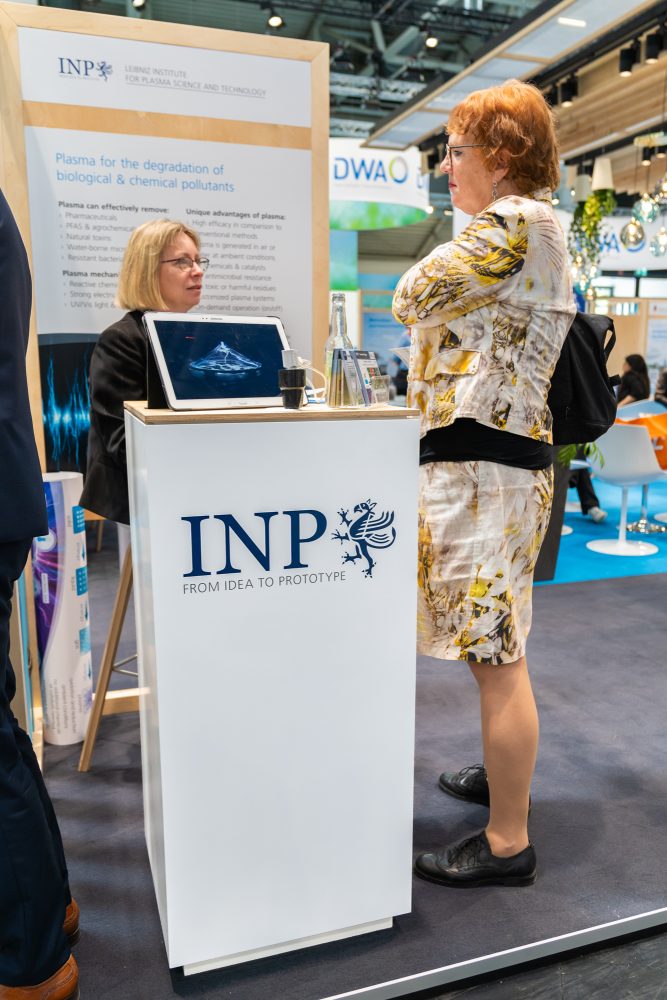
The INP’s presence at the GWP joint stand at IFAT Munich 2024, photo: GWP.
The most important added value for us, as a research institute conducting applied research, is the opportunity to secure project partners from the industry. As a GWP member, we have been able to secure many of our project partners through our participation in IFAT Munich and the annual conferences. Many of our partners are also GWP members. We also benefit from the information provided by GWP on current developments and its publications.
We participate in the working groups on Operations and Education, Industrial Water Management and Agricultural Irrigation, and value this opportunity for exchange.
We intend to take part in the GWP joint stand at IFAT again in 2026. This year, we are participating as a programme partner at the GWP Annual Conference – and are already looking forward to meeting many familiar faces and making new contacts – and we will continue our involvement in the working groups, hoping to launch many more projects with other GWP members.
We invite you to get in touch with the Leibniz Institute for Plasma Research and Technology (INP).